Budgerigar care in Australia: from backyard aviaries to apartment cages
Budgies are an Australian native that still get kept like a cheap ornament. A decent life means flight space, a proper diet beyond seed, toys that change, and a household that will never release a pet into the wild or park it beside a non-stick pan.
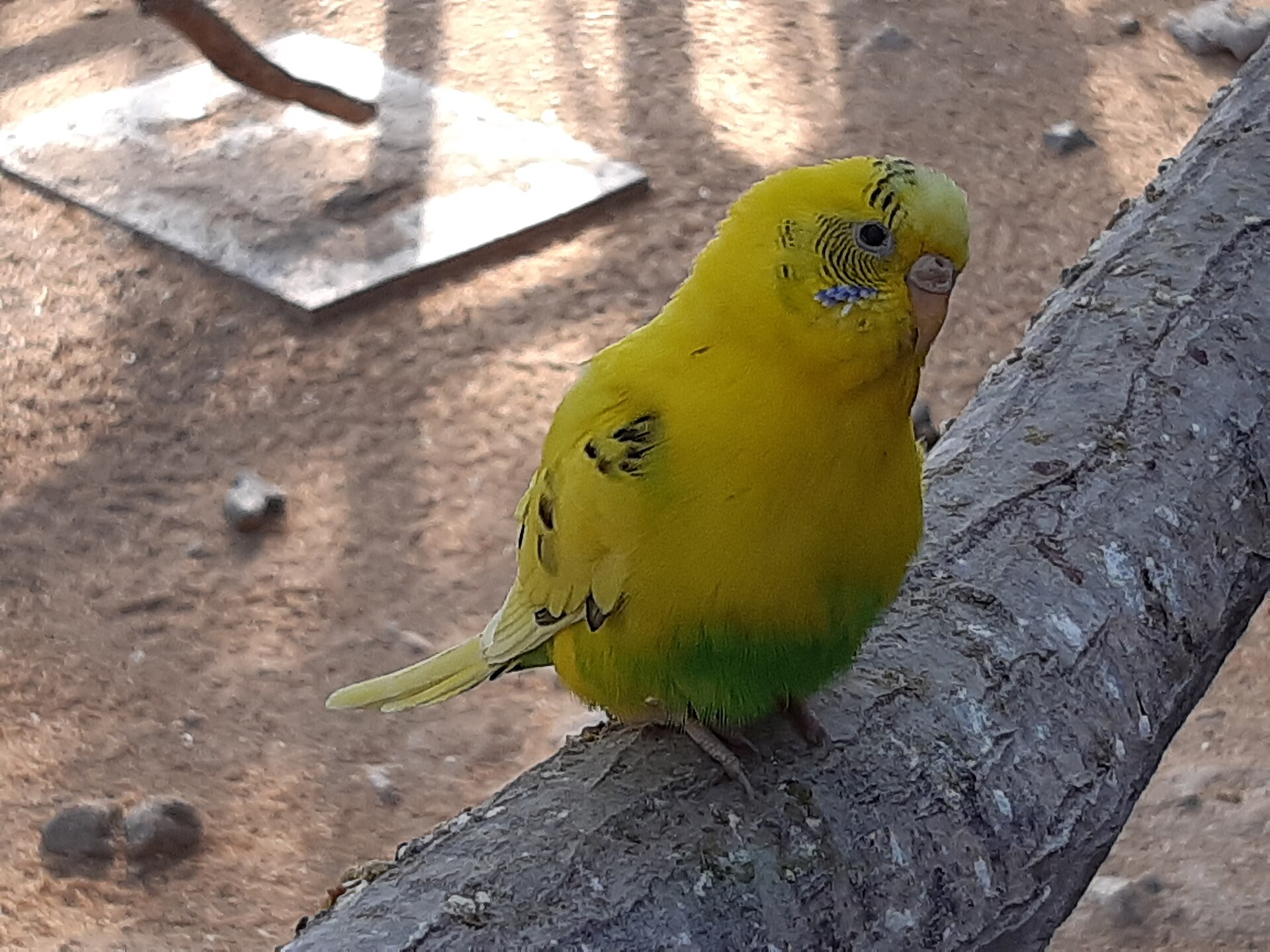
The budgerigar is one of the few pets in this country that is also a wild neighbour. Flocks still move through inland grass after rain. The pet bird in a suburban cage is the same species, selected for colour and a willingness to sit near people, and it is still a nomadic, social parrot with a fast metabolism and lungs that will not forgive a careless kitchen.
Australian households have kept budgies for generations. The difference between a decent life and a short one is rarely affection. It is space, diet, air quality, and the decision never to “let it go” because you are moving house.
They are native. That does not make your pet wild
A pet budgie hatched in a cabinet in western Sydney is not a candidate for release on a nature strip. Released cage birds die, get taken by butcherbirds and cats, or — worse — join and disrupt wild flocks with the wrong skills and, sometimes, the wrong pathogens. It is also illegal in spirit and often in letter to dump a domestic animal into the environment.
If you cannot keep the bird, rehome through a bird club, an avian rescue, or a private buyer you have actually met. Do not open a window and call it freedom. The same logic that applies to indoor cats and Australian wildlife applies in reverse: companion animals and wild animals both do better when we stop mixing the two on a whim.
How long they live when the setup is not a joke
A budgie that “just died one day” at four is common, not the ceiling. With flight, a decent diet, clean air and an avian-interested vet, eight to fifteen years is a realistic conversation. A bird that sits fluffed at the bottom of the cage, tail bobbing on each breath, is an emergency.
Housing: apartment cage versus backyard aviary
Width matters more than height. Budgies fly horizontally. A tall, thin decorative cage that looks pretty in a hallway is a vertical prison. Bars should be horizontal on at least two sides so the bird can climb, and spaced so a head cannot catch. Place perches of mixed diameter — wood, not only dowel — so feet stay in condition. Put food and water where droppings will not land in them as a matter of course.
In an apartment, the cage still needs daily out-of-cage flight in a closed, bird-proofed room: no open toilet, no ceiling fan on, no cooktop on, windows closed or screened. A single hour on a play-stand is better than a life between two swings, but it is not a substitute for a wide cage.
A backyard aviary is a legitimate Australian setup if you build it like you mean it. Think shade all afternoon, a solid roof over at least part of the flight, double-door entry so a bird cannot bolt past your knees, mesh that a rat cannot tear, and a night shelter that cuts wind. Hawks hunt suburban flights. Carpet snakes and rats climb. Neighbourhood cats have all day. If you would not leave a rabbit in that structure overnight, do not leave a budgie.
Heat is the other outdoor killer. A metal-roofed aviary in a western-Sydney or Townsville February is an oven. Provide deep shade, airflow, multiple water points, and a misting option the birds can avoid if they hate it. When the Bureau talks about extreme heat, birds come inside or into the coolest brick room you have. Night-time cold on a tablelands winter is less famous and still drops small birds. A draft-proof shelter and the option to lock them in is not fussiness.
Wherever they live, budgies want company. A single bird will bond to a person and can do well if that person is actually home and talking. Two or more birds keep each other sane if they get along. Watch for bullying at the food dish. Sexing pet budgies by cere colour is a rough guide in adults, not a licence to guess a breeding pair into a nest box you did not intend to manage.
Seed-only diets fail in slow motion
The classic Australian seed mix — a stripe of millet, canary seed and a few sunflower seeds — is what a lot of birds will choose. It is not what they should live on. Seed is high in fat and low in many of the vitamins a growing and moulting parrot needs. The result is obesity, poor feathers, liver trouble, and a bird that looks “fine” until it is not.
A formulated budgie pellet or crumble as the dietary backbone, plus vegetables every day, is the modern baseline. Conversion from seed takes patience: mix, reduce, and do not starve a bird to win an argument. Leafy greens, grated carrot, broccoli, a little cooked pumpkin, herbs — introduced one at a time — do more than a spray of millet at the weekend. Sprouted seed can be part of the picture if you grow it cleanly and throw it when it smells off.
Cuttlebone or a mineral block gives a beak something useful to do. Avocado, chocolate, caffeine and high-salt leftovers are not food. Toys are diet for the brain: rotate shredders, swings and a twig from a bird-safe tree. A silent bird with two plastic bells is underemployed.
The kitchen can kill faster than a hawk
Non-stick cookware and some heaters give off PTFE (Teflon) fumes when overheated. Those fumes can drop a bird in a room that still looks fine to a person. If you keep budgies, treat overheated non-stick as a household emergency: birds out of the kitchen, windows open, cookware replaced with stainless or cast iron if you can. Self-cleaning ovens, some waterproofing sprays, burnt oil, and heavy aerosol use belong on the same danger list.
Incense, cigarette smoke, scented candles and plug-in oils are not “a bit of ambience”. Birds have an efficient respiratory system. That efficiency is why fumes hit them first.
If you also keep aquariums, you already know that invisible water chemistry can wreck a tank. Invisible air chemistry wrecks a bird. The discipline is similar to a beginner fish tank setup: learn the hidden system before you add the animal.
Noise, neighbours and the rest of the house
Budgies chatter. A happy flight at dawn is a genuine sound. In a brick apartment with a shift-working neighbour, that is a relationship problem you should solve with placement and cover, not with a dark cloth left on all day. Birds need a sleep of roughly ten to twelve hours in a quiet, dim space. A cage in the lounge that stays lit until midnight produces a tired, snappy bird.
Other pets are predators even when they “love” the bird. A dog that watches the cage is practising. A cat that sits politely is still a cat. Out-of-cage time is a closed-door activity.
Find an avian vet the week you bring the bird home. Not every clinic wants to see a budgie, and not every clinic should. Ask who is on after hours. Learn how to catch and towel a bird without crushing it before you are standing in a car park at night.
Food and water twice a day, stale vegetables out, a weekly clean that would pass a sniff test, and no release, no Teflon experiment, no “it’ll be right in the sun”. Budgies are a native parrot that agreed, somehow, to live in our kitchens. Meet them at that level and they stay long enough that you forget they were ever small.
People also ask
How long do budgies live?
A well-kept pet budgerigar often lives 8 to 15 years, sometimes longer. The three-year lives people remember from seed-only cages are usually poor diet, boredom and unnoticed illness, not the species’ natural span.
Can budgies live outside in Australia?
A well-built, shaded, predator-proof aviary can work in many climates. A wire box in full sun, or an open flight the neighbour’s cat can reach, cannot. Heatwaves, overnight cold snaps, hawks and rats all kill outdoor birds. You still need a plan to bring them into a cool, secure space when the forecast turns ugly.
What do budgies eat?
Seed alone is a poor staple. Offer a formulated pellet or crumble as the base, plus daily vegetables, some sprouted or soaked seed as a portion of the mix, and clean water. Cuttlebone or a mineral block supports the beak. Fruit is a small treat. Avocado is not a treat.