Beginner fish tank setup in Australia: cycle first, shop second
The kindest first aquarium is an empty one you learn to cycle. Australian tap water needs conditioner, goldfish do not live in bowls, and a January heatwave will cook a tank you placed in a window because it “looked nice”.
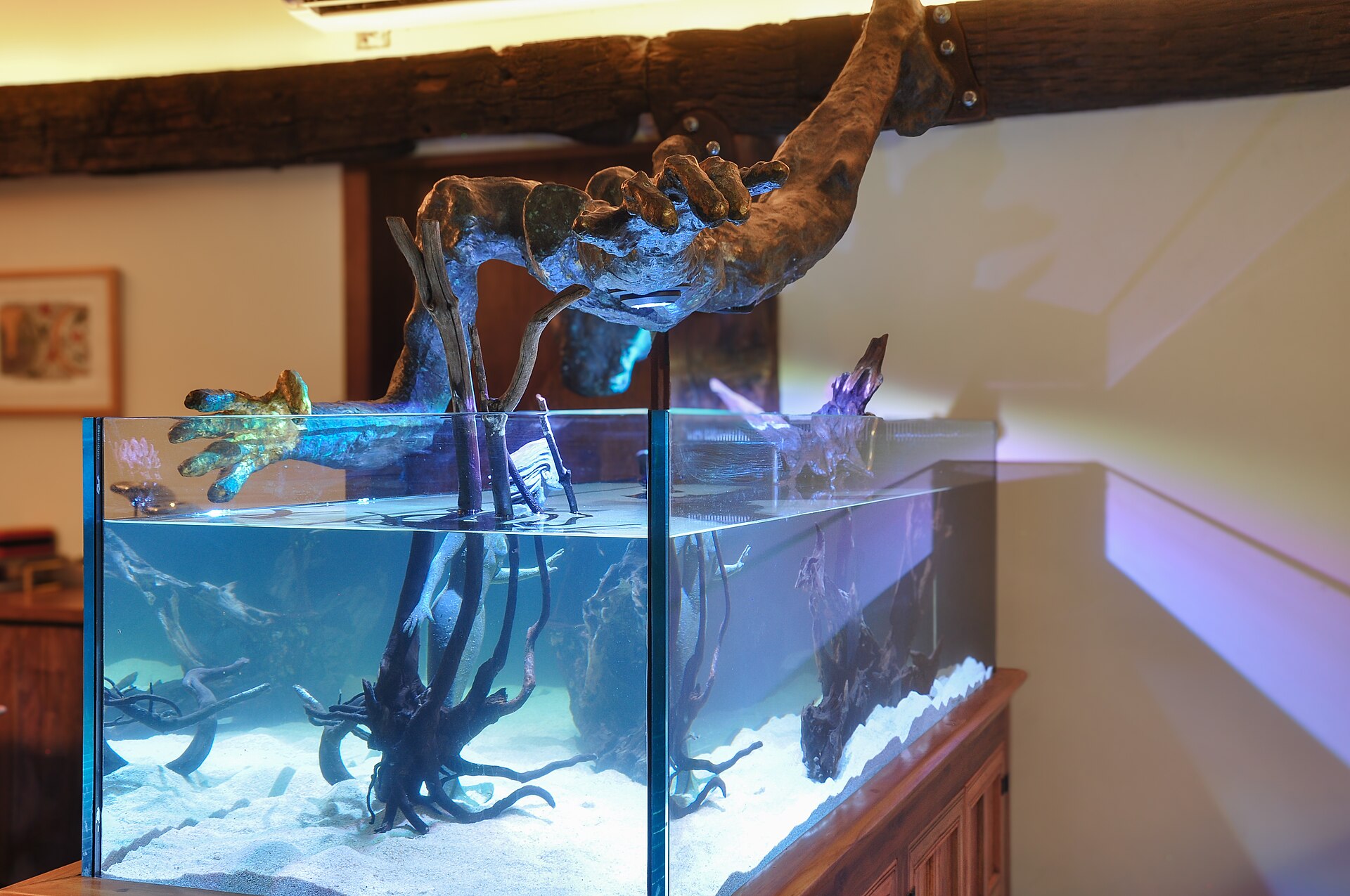
The most expensive mistake in Australian fishkeeping is not the tank. It is the Saturday where you buy the tank, the gravel, the plastic plant, and a bag of fish that will be gasping by Thursday. Beginners are sold a complete “starter kit” and a livestock list in the same hour. The biology does not work that way. A filter is a farm for bacteria. Until that farm is running, the pretty water is a poison loop.
The order that keeps fish alive is placement, water chemistry, cycle, then livestock. If you want a low-effort ornament, buy a fern.
What you are actually building
Fish excrete ammonia, which burns gills. In a cycled tank, bacteria on the filter media convert ammonia to nitrite and then to nitrate, which you manage with water changes. That chain is the nitrogen cycle. There is no honest “instant” replacement. You need a test kit that reads ammonia, nitrite and nitrate, and the willingness to write the numbers down.
Size, shape and the goldfish-bowl fantasy
Bigger is kinder. A larger volume changes temperature and chemistry more slowly. The smallest tank a beginner should consider for a handful of small community fish is larger than the cube on a student’s desk, and goldfish are not community tetras. Fancy goldfish need a serious, filtered volume each; commons and comets need pond-scale thinking. None of them belong in a bowl. Bowls have poor gas exchange, no real filter, and a surface area that lies to you about how much water is there.
Tanks belong on a proper stand, not a particle-board TV unit that will bow. A leak onto a rental floor is a bond conversation and a stain-and-odour afternoon you did not want.
Australian tap water is not “fine as is”
Most town supplies are chlorinated or chloraminated so that people do not get sick. Those same disinfectants wreck gills and nuke the bacteria you are trying to grow. Use a conditioner that states it handles chlorine and chloramine, every time you add water, including top-ups if you are replacing more than evaporation. Rainwater is not automatically safer — it can be clean, or it can be roof-gutter soup. Bore water can be hard, salty or both. Test, do not assume.
Some cities run soft water, some run liquid rock. That matters when you pick fish. A beginner who buys a wild-caught soft-water species and keeps it in very hard tap water is picking a fight with chemistry. Start with hardy, captive-bred community fish that match what comes out of your tap after you have conditioned it. Ask the shop what they keep their fish in, and treat a shrug as a reason to try a different shop.
Never dump untreated tap water into a tank because you are in a hurry. Never rinse filter media under the tap until it looks new. You will have just murdered the cycle and blamed the fish.
How to cycle without folklore
There are two honest methods for a beginner. One: add a small, controlled source of ammonia (a pinch of fish food that decays, or a bottled ammonia product used exactly as an aquarium instruction describes) to a fully set-up, dechlorinated tank, and wait, testing every day or two, until ammonia and nitrite both read zero and nitrate has risen. Two: borrow used filter media or a squeeze of mulm from a healthy, disease-free established tank and still test until the same numbers behave.
“Fish-in cycling” exists and is harder on the animals. If a shop talks you into it, you are committing to frequent water changes and a lot of guilt. This desk’s advice is to wait. Three to six weeks is common. Cooler rooms take longer. If you keep “cleaning everything” because the glass looks new-home messy, you keep restarting the clock.
The filter should run 24 hours a day from the moment there is water. Media should stay wet if you ever move it. When you clean, rinse sponges in a bucket of old tank water, not in the laundry tub. Replace chemical cartridges on their own schedule; do not throw out the biological sponge because a box said “month two”.
Heaters belong in most tropical community tanks. In much of Australia the room is warm enough in January and too cool in July. A heater with a guard, sized for the volume, stops the overnight crash. In summer the problem flips: a tank in a window in Perth or Brisbane can overshoot into dangerous heat. Place the aquarium away from afternoon sun. Use a lid that still allows gas exchange. In a heatwave, float frozen bottles of tank water (not freezer frost), point a fan across the surface, dim the light, and skip the big feed. If fish are gasping, you have an emergency — cool gradually and ask an experienced shop or a fish-savvy vet, not a Facebook pile-on.
Stock last, and stock less than the label
The old “inch of fish per gallon” line is how tanks get overstocked. Count adult size, swimming style and waste. Two fancy goldfish are a project. A school of small tetras plus a centrepiece fish plus a loach plus a “cleanup crew” of six mystery snails is how nitrate runs away from a beginner.
Buy from a shop that will refuse to sell you the third angelfish for a 60-centimetre tank. Quarantine new fish in a separate, cycled hospital tank if you can; if you cannot, at least do not add six species on one receipt. Sit on your hands for two weeks between additions and test.
Do not take wildlife from a creek. That is illegal in most places, it stresses the animal, and it can move disease and pests. The same ethic that applies to keeping pet reptiles legally applies here: the bush is not a livestock aisle.
Algae is information: too much light, too much feed, not enough change. A timer on the light does more than a miracle liquid.
Look at the fish every day. Feed an amount they finish. Weekly, change 25 to 40 per cent of the water with conditioned water of a similar temperature, and still test after any change. Do not dump a week of holiday food in a block and hope.
White fungus, clamped fins, a fish hanging in a corner, or a sudden death are reasons to stop adding animals. Many over-the-counter “medications” are the wrong drug and will wreck the cycle. Ask a competent shop or a veterinarian who sees fish. A crash after a big clean is usually you. A crash after a heatwave is the room. A crash after “just a few more tetras” is maths.
Cycle first. Shop second. Leave the bowl on the shelf.
People also ask
How do I set up a fish tank for beginners?
Choose the largest tank you can honestly maintain, place it away from summer sun, add substrate, filter, heater if needed, and dechlorinated water, then cycle the filter for weeks before you buy fish. Learn the test kit first. Shop second.
How long does a tank take to cycle?
Often three to six weeks, sometimes longer in a cold garage or when you keep resetting the filter. You are waiting for bacteria that turn toxic ammonia into less harmful nitrate. There is no honest overnight cycle in a brand-new bowl.
Can I put goldfish in a bowl?
No. Goldfish are messy, coldwater animals that need a large, filtered volume and regular water changes. A bowl starves them of oxygen, space and stable chemistry. If the only space you have is a bowl, you do not have space for a goldfish.