Walking your dog in Australia: leashes, footpaths and council rules
In most Australian streets the default is on-leash, plus a tag, a chip and a bag in your pocket. A practical guide to leads, beaches, wildlife and what happens when the clip stays open.
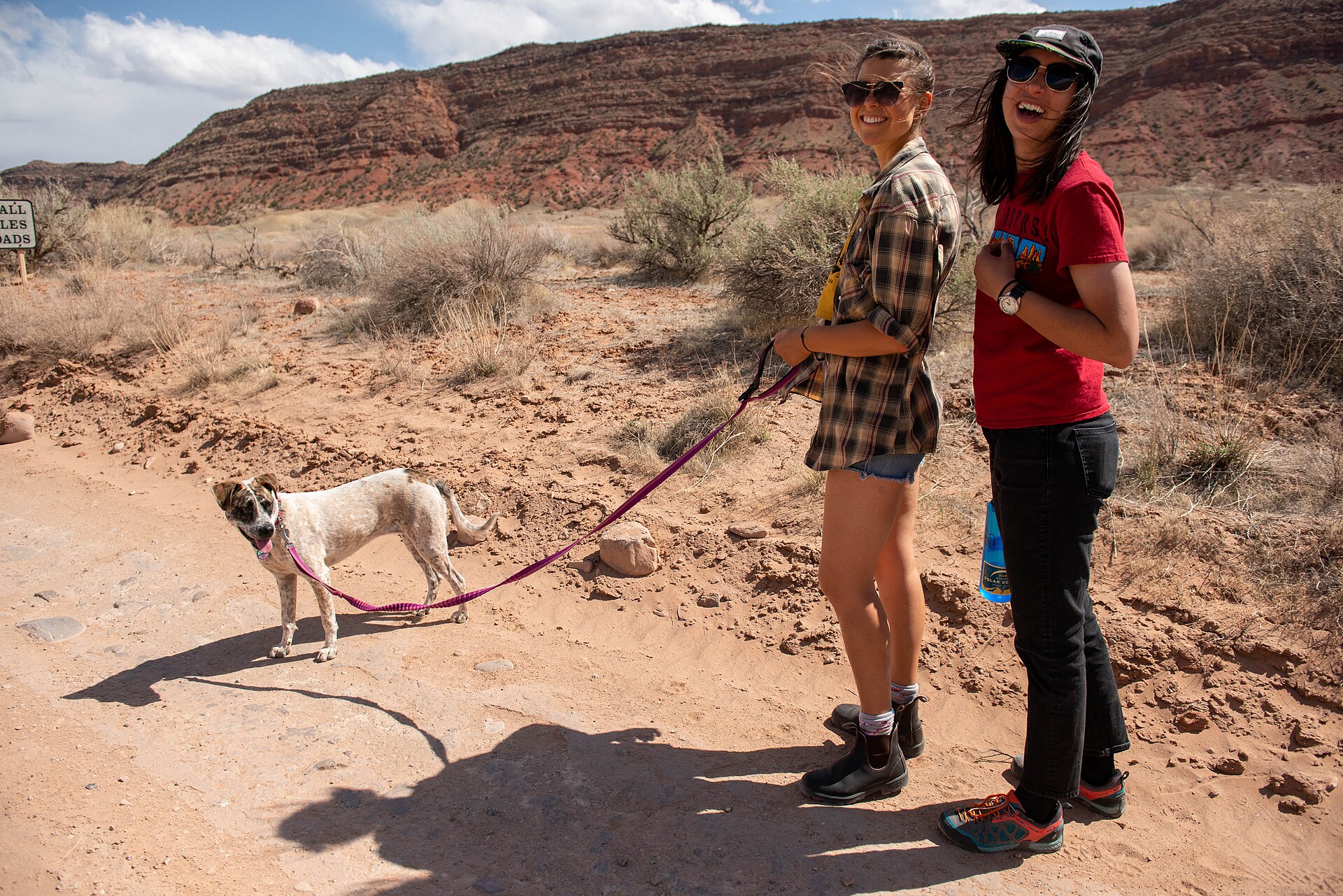
A lead is not a philosophy. It is a piece of webbing that keeps your dog out of a bike lane, a picnic, a swamp wallaby and a conversation they were not invited into. Australia does not have one tidy national rule for walking dogs. It has hundreds of councils, a stack of state animal-management laws, and a lot of footpaths where the default is on-leash whether or not the kelpie two doors down is already loose. If you remember one civic sentence, remember that one. Off-leash is a signed exception. Everything else is you holding the clip.
This is the street-level companion to park manners. For the social contract inside a fenced enclosure, use dog park etiquette in Australia. For the walk from your gate to the shops, stay here.
On-leash is the ordinary setting
In suburban streets, town centres, bus interchanges and most neighbourhood parks, expect to clip on. Sports ovals often want dogs off the playing surface entirely, or on-leash around the boundary, especially on game days. Playground buffers exist because toddlers put things in their mouths and because a dog running through a swing set is a film nobody wants. Cemeteries, school grounds and posted wildlife areas are usually a no, or a hard on-leash.
Beaches are their own religion. Some are dog-friendly at certain tides and hours. Some are banned because of nesting shorebirds. Some change after a summer of complaints. The same coastline can flip between councils. Read the sign at the path you actually used, not the sign you remember from 2019 in a different suburb.
Shared paths — the ones with painted bikes and prams — are where recall fantasies go to die. A dog bursting sideways after a ball is a collision. Shorten the lead. Step off to sniff. Do not let a long line become a tripwire across a downhill bike run in the Adelaide foothills or along the Yarra.
If you travel, reset your assumptions. A habit that was tolerated on a quiet Tasmanian lane can be a fine on a Gold Coast path the same week.
Identification is part of the walk
A microchip in the shoulder is not a collar tag. Both matter. The chip needs your current mobile, not the number from the share house in 2018. The tag needs a phone number a stranger can ring when they are holding your dog in the rain. Council registration, where it applies, is how rangers know the animal is meant to exist at your address. For the longer version of chips and local registration, see microchipping and council registration.
Walk without a collar or harness and you have no handle and no visible ID. Harnesses suit some dogs; flat collars suit others; head collars are a training tool that still need a fit and a kind introduction. None of them work in your pocket. If the dog can slip the collar, fix the fit before you test it near a road.
Declared dangerous, menacing or restricted dogs sit in a tighter box. Conditions can include a distinctive collar, a muzzle in public, a shorter lead, and a ban on off-leash areas. Those orders are serious. Treat them as serious. Ordinary owners should still know that a bite or a serious chase can move a dog into that box. The walk you thought was relaxed is part of that record.
Wildlife, livestock, and the myth of the friendly chase
Australian walking is full of other animals who do not want to meet your dog. Magpies in spring will already be negotiating with your skull; adding a loose dog to a nest defence is how you get a worse story. Brush turkeys, lizards, bandicoots, possums, flying-foxes on the ground, nesting plovers on the foreshore — a chase is not enrichment. It is predation and, in some places, an offence.
On the urban fringe and in regional towns you will meet chooks, sheep, and horses. A dog who "only wants to play" can still wreck a ewe or get itself kicked. Clip on at the sound of livestock. Teach a leave-it that works when the smell is interesting. If you hike, read the park's pet rules before you pack the bowl. National parks are often a no. State forests vary. Private fire trails are not your off-leash gym.
Bins are a quieter wildlife. Do not let your dog raid them. Do not leave bags of poo sitting "to pick up on the way back" as if the street is your hallway. Carry the bag. Bin it where bins exist. Heat makes forgotten bags into a civic event by lunchtime.
Equipment that keeps the walk boring, in a good way
A lead of ordinary length — something you can keep short in a crowd and loosen on a quiet path — beats a retractable that turns into a wire across a supermarket exit. Retractables have their fans. They also have a talent for burns, snapped clips and dogs who arrive at another dog at full stretch. If you use one, lock it in busy places or do not use it there.
Lights on you and the dog help in a Darwin downpour at dusk and on a Hobart morning in June. High-vis is not only for tradies. A handle you can grab on a harness helps if you need to lift a dog over something unpleasant. Water in summer is not optional. Neither is checking the bitumen with your hand.
Training belongs on the walk. Loose-lead work, a sit at the kerb, a recall practised in a fenced legal area before you ever dream of an unmarked oval. If the dog lunges, get help from a trainer who does not sell dominance theatre. If the dog is in pain, see a registered vet; pulling and snapping are sometimes a shoulder, a nail, or a mouth, not a personality.
What "off-leash illegally" actually costs
Sometimes it costs a warning and a blush. Sometimes it costs a fine. If there is an injury to a person, another dog, or livestock, it costs a great deal more — veterinary bills, council declarations, court, a dog who loses the right to ordinary parks. If the dog runs into traffic, the cost can be the dog.
Rangers are not villains in this story when they are asking you to clip on in a signed on-leash reserve. They are the people who went to the last complaint. Be the owner who makes their shift dull.
Puppies on a lead are learning the city. Let them look. Do not flood them with every greeting. Adult dogs do not owe every other adult dog a hello. Cross the street. That is manners and it is also how reactive dogs get home without a scene.
A walk that looks like Australian competence
Tag on. Chip current. Lead clipped until a sign says otherwise. Bags in the pocket you use. Water when the state has a summer. A plan for heat that is not "they like it". Eyes on your own animal when a skateboard goes past. A greeting asked for, not assumed. Wildlife left alone. Playgrounds treated as not yours.
None of this is hostile to dogs. It is how dogs keep being welcome on ordinary streets while the rest of us buy milk. The owners who treat the lead as an insult are the reason the next sign is stricter. The owners who treat the lead as a tool get the long evenings on the same footpath, year after year, which is the actual prize.
People also ask
Do I have to keep my dog on a lead in Australia?
In a great many local government areas, yes — unless you are inside a signed off-leash zone at an allowed time. Footpaths, shopping streets, ordinary suburban parks and the edges of playgrounds are typically on-leash by default. There is no single national lead law, so the sign on your reserve and your council website beat a habit you picked up in another suburb.
Can I walk my dog without a collar?
Walking without a collar or harness is a bad idea even where the wording is loose, because you need a way to hold the dog and a place for identification. Most councils expect a registration tag and a microchip that actually points to your current phone number. A naked neck on a main street is how a slip becomes a lost dog.
What happens if my dog is off-leash illegally?
You can be fined, asked to leave, or, if something goes wrong, much worse — especially if there is an injury, a chase into traffic, or a dog already on a dangerous-dog order. "He's friendly" is not a defence. Clip on, practise recall in legal spaces, and treat the lead as the default rather than a personal insult.
Do I need a muzzle in public?
Ordinary companion dogs usually do not, unless a council order, a park rule or a veterinary behaviour plan says so. Declared dangerous or menacing dogs often have extra conditions that can include a muzzle, a distinctive collar and tighter lead rules. If your dog has a bite history, get legal and veterinary advice rather than hoping a quiet street is enough.